Akagera National Park Adventure
When most people think of Rwanda, misty mountains and mountain gorillas immediately come to mind. But just a short two-and-a-half-hour drive east of Kigali lies a completely different world: Akagera National Park.
Swapping dense rainforests for golden savannahs, acacia woodlands, and papyrus swamps, Akagera is Rwanda’s only savannah park and one of Central Africa’s most remarkable conservation success stories. If you are planning an Akagera National Park safari, here is everything you need to know about this breathtaking wildlife adventure.
The Return of the Big Five
Decades ago, Akagera’s wildlife populations were severely depleted. Today, thanks to the management of African Parks and the Rwandan government, it is a thriving sanctuary.
It is now proudly a Big Five destination. During your game drives, keep your eyes peeled for:
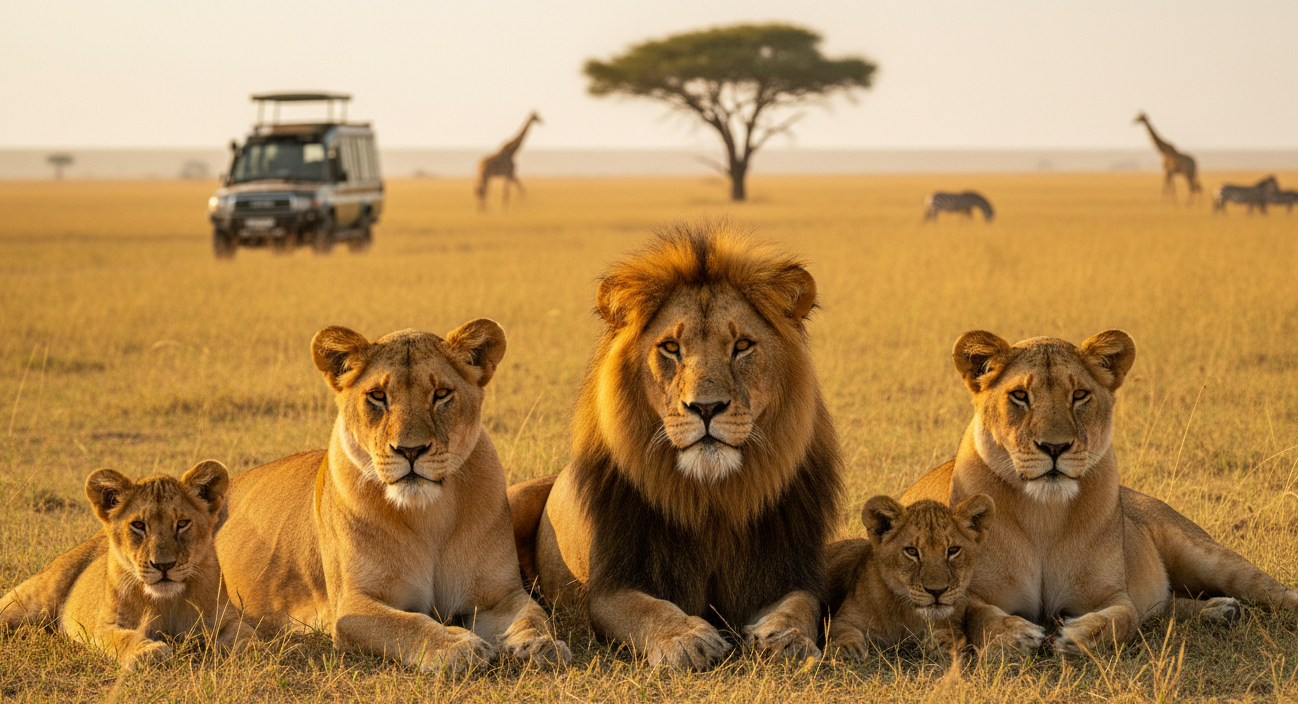
- Lions: Reintroduced in 2015, the prides are flourishing and are often spotted lounging on rocky outcrops in the northern plains.
- Rhinos: With successful translocations of both eastern black rhinos and southern white rhinos in recent years, the park is a vital haven for these endangered giants.
- Elephants & Buffaloes: You will frequently see large herds grazing the open plains or gathering near the water sources.
- Leopards: Elusive and stealthy, these beautiful cats are best spotted during a thrilling guided night drive.
Exploring the Waters of Lake Ihema
An Akagera National Park safari isn’t just about dusty game drives; roughly a third of the park is covered by a complex network of lakes and wetlands.
Taking a boat cruise on Lake Ihema (the park’s largest lake) is an absolute must. Drifting along the forest-fringed waters, you will get up close to massive pods of hippos and enormous Nile crocodiles basking on the banks. For birdwatchers, this wetland is a paradise, boasting over 480 bird species, including the prehistoric-looking shoebill stork, the majestic African fish eagle, and vibrant malachite kingfishers.
Practical Tips for Your Safari
To make the most of your adventure, keep these practical tips in mind:
- When to Go: The dry seasons (June to September and December to February) are the best times for wildlife viewing. The grass is shorter, and animals congregate around the remaining water holes.
- How to Explore: A 4×4 vehicle is highly recommended. The classic route involves entering through the South Gate and slowly game-driving your way up to exit via the North Gate, where the wildlife density—especially predators—tends to be the highest.
- Where to Stay: Akagera offers excellent accommodations to fit different travel styles. You can camp under the stars at Muyumbu or Mutumba campsites, enjoy the eco-friendly luxury of Ruzizi Tented Lodge right on Lake Ihema, or go all out at the high-end Wilderness Magashi Camp in the north.
A Conservation Triumph
Visiting Akagera is more than just a holiday; it is a way to directly support a living conservation triumph. Every entry fee and booked activity goes toward anti-poaching units, community upliftment programs, and the continued protection of this beautiful ecosystem.
All Categories
- 4×4 Car Rental
- Adventure
- Affordable Car Rental
- Airport Pickup
- Car Rental
- Chauffeur-Driven Car Rental
- City Tours
- Cross-Boarder Car Rental
- Cruises Tour
- Culture & Traditions
- Events & Festivals
- Hiking & Nature Trails
- Life Style
- Local Experiences
- National Parks
- Primate Safaris
- Rwanda Travel Guides
- Safari Vehicle
- Self-Drive Car Rental
- Travel Tips
- Uncategorized
- Where to Stay
- Wild Camping
Recent Posts

La Licorne Apartment, Kicukiro, Rwanda – Your Perfect Kigali Base
Tags